

Linked to Wordless Wednesday at 5 Minutes For Mom.
It's great to be a homeschooler.
 We found the idea for this craft in Sharon Dunn Umnik's 175 Easy-to-Do Everyday Crafts. Hers was actually a twirly monkey, but basically the same idea. This was one of two crafts we found interesting in the book, so I guess we'd give it a lukewarm recommendation, except that we really did like this craft.
 They colored in half of the biggest circles (for pants), and drew faces on the medium sized circles. The smallest circles were cut in half, and glued on sides of the faces, for ears. Finally, I stapled on pipe cleaners, cut in half for arms, and in fourths for legs, secured with tape.


 The older children (ages 9-12) are just finishing up reading Genesis, and Exodus, and should be moving on into Leviticus this week, so I was quite happy to see Phil Vischer's What's In The Bible, Wanderin' in the Desert, in at the bookstore.
The first two titles, In The Beginning, and Let My People Go!, cover Genesis and Exodus, and answer questions like, "What's in the Bible?", "Who wrote the Bible?", "Who chose the books of the Bible?", and "What is salvation?"


I picked them up for my younger children, but insisted my older children watch with us, at least once. At first, they were put off by the idea of puppets, but it wasn't long before they were drawn into Vischer's excitement. That excitement is one of my favorite aspects of the shows, too. It's great to have the children see another adult so fired up about the Word.
My 12 year old told me he thought it was the best Christian DVD series we'd viewed yet. Then, the highest praise came a few days later, when he asked when the next one was coming out.
The children like the easy to understand definitions of words like salvation, and redemption. They like the information about church history, and the use of time lines. They like the sweeping overview of the books. And, of course, they like all the silliness.
The third title, Wanderin' in the Dessert, which we watched this weekend, takes on Leviticus, Numbers, and Deuteronomy. As you might imagine, I think it's going to take us several viewings to fully absorb the content. But, Mr. Vischer does an excellent job of explaining the difference between ethical and ritual laws, and in defining holiness. There is also a fun musical finale, summarizing everything covered so far.
All in all, I believe it will prove a very helpful tool, as the children head into the last half of the Pentateuch. And, hopefully by the time they're ready to begin Joshua and Judges, the next installment will be in the bookstore, too.
It's great to be a homeschooler.
 I mentioned in my Science Sunday post, that I would be reviewing Jill Frankel Hauser's Super Science Concoctions, which I thought was either the best science book for children ever, or a huge disappointment.
 However, we've encountered books like that before, only to experience a series of total flops, or mediocre results, when we actually tried out the experiments.
But, the other experiments we tried - making colloid, gelatin and juice, worms...


...using chromatography to make a fire breathing dragon, bookmark...

...turning brown sugar, cornstarch, and milk into a pretty yummy, butterscotch pudding...
...and the whole slew of cabbage based, pH testing, experiments, that made up our Science Sunday post, turned out terrifically.
Many of the base experiments are familiar, like the vinegar egg etching, perfume making, or rain in a jar, but they all come with additional experiments, and some creative side activities (like the dragon bookmark above), and really clear, interesting scientific explanations. Add to that, the fact that each experiment, and scientific explanation, leads nicely into the next, and you have a pretty successful science book. The target age range is 6-12, and while Hauser also has a book aimed at 2-6 year olds (which I hope to be checking out soon), my younger children were able to join in, and understand (pretty well), all of the experiments we performed.
There's more to say about this book. I could really gush on for quite a while. But, the general gist is we like it!
It's great to be a homeschooler.

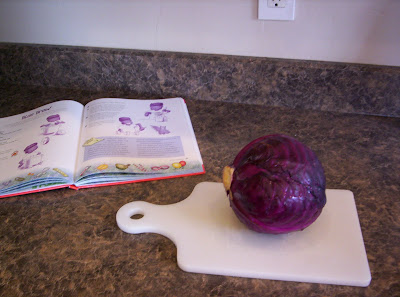


 It really tastes alright. I was a little skeptical, and the children (who were probably tipped off by the Mission Impossible theme song I was humming, as I poured the drink) were less than enthusiastic, until one brave volunteer gave it a taste. It's funny, because you can't taste the cabbage, but it kind of takes the edge off the sourness of the lemonade, which combined with the color, does lead you to believe your drinking pink lemonade.


 All of these ideas, came from Jill Frankel Hauser's Super Science Concoctions, which is either the best children's science book I've ever seen, or the most disappointing. I'll let you know shortly, after we try out a few more of the experiments.
 We ended up with A Pill Bug's Life by John Himmelman. The children enjoyed Himmelman's story-like style, and it was full of a lot of facts, but I thought his illustrations made the tiny crustaceans look kind of creepy.


