Showing posts with label unit study. Show all posts

Friday, September 27, 2013

Apple Stamp Learning - A Fall Mini-Unit


As a reward for helping me pick the last of our apples, and as a way of using up the "good" half a few the birds had sampled, I covered the table in butcher's paper...


...and poured fall colored paint onto paper plates...


 ...for the girls to use for apple stamping.  They had a great time decorating the table.  And, as a bonus, their artwork turned out to be a pretty good backdrop for a lot of learning the next day...


...when the children labeled the different colored apples in the languages they are studying giving us a chance to discuss adjective placement and gender agreement.


Then, C (age 7) numbered the apples, while E (age 8) followed along printing out the number words in English, followed by D (age 10) with Spanish number words, A (age 12) and G (age 14) with French, and T (age 16) with German - which really was more like a multi-lingual spelling challenge than language learning, but good all the same.


When they got tired of that, they switched over to each child counting all of one color of apple (with T double checking the totals)...


 ...for the younger children to graph, with M&M's representing the paint colors (blue taking the place of "mixed paint" stamps)...


 ...while their older sibs reviewed the concepts of mean, median, mode, range, and percents with the same data.


We switched gears, and brainstormed adjectives describing the different colors of apples (ie. common for red, sour for green, sweet for yellow, rotten for brown, unnatural for orange, and so on) printing the words out in matching colors of crayon to the apples we were describing.


And finally, while we waited for an apple pie (made with the apples the birds didn't get) to come out of the oven, we passed the time spotting ink blot style pictures in the stamps - like the dinosaur below, crying over a lost tooth.


It's great to be a homeschooler.

Sunday, January 1, 2012

Chocolate Unit Links and Books

We weren't really planning on a chocolate themed study last week, but along the way of exploding chocolate Santas in the microwave, seizing and "saving" melted chocolate, testing the "melt in your mouth, not in your hands" quality of M&Ms, blooming chocolate, and watching it melt (my personal favorite), we learned enough about the geography, history, mathematics, and science of chocolate, mainly from the video links below, to easily create an entire unit study.

Video Links (move your mouse over the titles to find the links):

The Magic School Bus in the Rain Forest

"Chocolate" on BrainPop.com (this is a subscription service, so an account is required to view the video clip.

The Food Network's Good Eats episodes "
The Art of Darkness I, II and III" with Alton Brown.

The Science Channel's
How It's Made: Cocoa Beans.

Hershey's "
Making our Chocolate" (sort of has a 1950s Disney feel to it).

After all we learned from these clips, I decided to stick with chocolate themed fiction for fun, as a compliment to our experiments, instead of checking out any of the non-fiction, from bean to bar type books for the children.

The younger children, and I enjoyed Margret & H.A. Rey's Curious George Goes to a Chocolate Shop. The librarian who checked it out for us, glanced down at the cover, and without even cracking a grin said, "I bet he's going to into trouble, but it will work out in the end." That pretty well sums up all the Curious George books, doesn't it? This particular title reminded me of the I Love Lucy chocolate factory episode, which naturally, we had to watch, too.


Our favorite book of the week was Patrick Skene Catling's take on the Midas touch - The Chocolate Touch. It's a Mrs. Piggle-Wiggle meets Bread and Jam for Frances cautionary tale about the dangers of being greedy when it comes to chocolate...


...as is Robert Kimmel Smith's Chocolate Fever, though told with a slightly less magic flair.


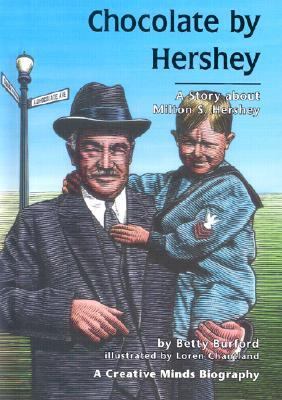
Chocolate by Hershey, A Story about Milton S. Hershey by Betty Burford was the one non-fiction, simple chapter book I did pick up, for additional reading after watching the biography of the inspiring entrepreneur on Biography.com.


I also brought in a few of Jerry Pallota's chocolate themed math books. They are fairly simple, but always a big hit with the younger children.


It's great to be a homeschooler.
Linked with What My Child is Reading at Mouse Grows Mouse Learns.

Saturday, June 27, 2009

Around the World in Eighty Days - Unit Study Day 5: Building a Put Put Boat


As we picked up the pace of our reading (we're hoping to complete Around the World in Eighty Days this weekend), we embarked on one last project, that proved to be just about as difficult as making a trip around the world ourselves. Since Phileas Fogg does the majority of his travel by steam train or steam ship (there's no adventure with a hot air balloon in Verne's novel - at least not this one), it seemed only natural to do a little study of steam engines.

The Mid-Continent Train Museum has a pretty good explanation for kids, of how a steam locomotive works. They also have coloring pages, printable crossword puzzles, and a quiz dealing with steam trains at www.midcontinent.org/kids/kids.html. I'm hoping later this summer to hook up with a steam train ride somewhere here in Montana, but it's a big state, and a short summer, so we'll see.

In the meantime, I decided we should try building a toy version of a steam ship. These are often called pop pop, or put put boats. Simple ones can be purchased for under $10.00, but it costs even less (and you lean even more) if you make one yourself (at least that was my thinking as we started our project). For the do-it-yourselfer, there are a couple of different options.

The simple version, used by the Boy Scouts, calls for some flexible copper tubing (see www.sci-toys.com/scitoys/scitoys/thermo/thermo.html#boat). There's a more complicated version at http://www.sciencetoymaker.org/, which uses only drinking straws and a pop can for the engine, and a milk or juice carton for the boat. I know that sounds simple, but there are more than twenty steps involved, and you end up using both a hot glue gun, and epoxy before you're finished.

Still, armed with the promise from The Science Toy Maker, that anyone who could follow simple instructions, could complete the project - we steamed ahead. If you want to make one of these yourself, check out the website for complete instructions, but by way of overview, let me tell the project involves...


cutting up a tin can...


...cutting it and folding it according to a printable template...


...shaping it with straws, which eventually get epoxied in...


...making it air tight with epoxy. Testing for leaks (and then fixing them with more epoxy)...


...building an angle tool with another printable template, to form and hot glue the engine around...


...cutting apart a milk or juice carton...


...stapling, sanding, and hot gluing the boat together...


...hot gluing the engine into place...


...making a candle holder out of tinfoil...


...checking for leaks (ours leaked like a sieve), and adding more hot glue...


...testing the boat.

Our boat did work, and did make the wonderful little put put noise, as promised. The only drawback - other than the long hours of building it, the dangerous epoxy fumes, dealing with sharp sided aluminum, and the burn dangers of hot glue, was that the boat only ran for about five seconds (okay, maybe it was 30 seconds) before the tiny candle was used up, and with no heat to create steam, the boat putted to a halt. Not exactly earth shattering! My advice is watch the Toy Maker's video, and explanation of how the boats are powered, and then shell out the $10 or so, to buy one with a longer lasting oil lamp already in place.


Or, scrap the project entirely, and settle in for a nice game of Whist. Keep the cut up pop can though, it makes a really good object lesson for figuring the surface area of a cylinder.


It's great to be a homeschooler.

Friday, June 26, 2009

Around the World in Eighty Days - Unit Study Day 4


I am pretty certain that we are not going to make this more than a 5 or 6 day unit study, which means that we have some heavy reading ahead of us, since we only read two chapters yesterday, taking us through chapter 14. As Phileas Fogg detoured to save Aouda, we detoured to http://www.snaithprimary.eriding.net/, to learn a little more about the country of India.

Getting back on track, we focused on learning a bit more about Asia as a whole, and played a mapping game at www.kidsgeo.com/geography-games/asia-map-game.php. This led nicely into a mapping project to demonstrate the difficulty of turning a round globe into a flat map.

We started out with a flat map (I know that's backwards to what I just said, but hang in there). After gluing it to a cereal box to make it a little stronger, we drew an orange peal design over the top of the map.


Then we cut out the orange peal.


Using a thumbtack to make holes in the tops of the "petals", and then hold them together, we formed our map into a globe (almost). It was quite clear that we left a good deal of the map behind in the process.


Moving the other way through the project, we blew up a balloon, and drew some pictures on it. We started out with lines representing the equator and the prime meridian, and then added one picture in each of the four sections of hemisphere.


We let the air out of the balloon, cut it open, and attempted to stretch it out into a rectangle. The effect was good, but as you can see from the pictures, we used a washable marker that didn't dry on the surface of the balloon, so things got a little messy.


We marked our story map through Calcutta, and noted Phileas Fogg's arrival in that city on October 25th on our log. Then, we decided instead of filling in our vocabulary sheets, we would begin watching the 1950's movie version of Around the World in 80 Days starring David Niven. Since that is a three hour movie, it pretty much finished off our day. But, with David Niven as our guide, we finished it off with a good deal of British pomp and dignity.

It's great to be a homeschooler.

Thursday, June 25, 2009

Around the World in Eighty Days - Unit Study Day 3


We continued to follow Phileas Fogg through chapters 9-11 of Around the World in Eighty Days by Jules Verne, marking his progress through India on our map, and making note of the date he passed through Bombay, on our log sheet. The rest of our study included;


Vocabulary: caprice, boisterous, propitiate, indefatigably, amiable, minaret, fakir, pagoda, cistern, despotic, dominion, rajah, insurrection, cumbrous, deign, grottoes, promenade, crestfallen, viaduct, verdant, rite, reverie, vagabond, maledictions, obstinately, conveyance, zebu, avarice, howdah.


Project: To demonstrate the concentration of population within certain areas (some of which Mr. Fogg experiences as he makes his journey), we printed off a list of some of the largest cities in the world, listed in order of population from www.worldatlas.com/citypops.htm . Then we printed an outline map of the continents, and glued it to a piece of cereal box to make it sturdy. Using our city list, an atlas, and a thumbtack, we made holes in the map for each of the 25 most populated cities on our list.

When you hold the map up to a window, the population centers shine like cities at night. Obviously, the more large cities you include the better the effect will be.

We compared our map to the picture of the world at night, that was so popular in the email for a while. Just google "the world at night", and several aerial images will pop up. This led us to an interesting discussion of whether you could see the whole world at one time from space? And, if you could, would it all be dark at the same time? And, if it was all dark at the same time, what would be the chances of finding a completely cloudless night over the entire surface of the globe?

Just for Fun; We watched the latest movie version of Around the World in Eighty Days, with Jackie Chan. It has almost nothing to do with the original novel, but it does seem to aim at capturing the adventurous spirit of invention found in the other works of Jules Verne.

It's great to be a homeschooler.

Wednesday, June 24, 2009

Around the World in Eighty Days - Unit Study Day 2


I would have loved to have made rhubarb and gooseberry tarts for the kids, to start out our lesson today (it's one of the things Phileas Fogg had for breakfast on the day he started his journey), but there is not a canned gooseberry to be had on the western side of Montana. Gooseberries do grow well in Montana, but will not be ripe for a couple of months. So, while we did receive a very nice invitation to pick as many as we like on the property of one helpful store clerk, that will have to wait until they are in season. Instead, I'll break down our study up to today, below.

Read chapters 4-8 in Around the World in Eighty Days by Jules Vern.

Vocabulary - conscientiously, chary, susceptible, ensconced, stupefaction, aberration, espoused, minutely, plied, quay, scrutinized, panorama, importunate, visaed, indispensable, rogue, inscribe, itinerary, stipulated, wont, volubly, fob, defiant, impenetrable, cogitating, and equanimity.
Again, you can find worksheets to go with these words at www.lessontutor.com/ees80printPT1.html.


Math - Create a chart to match Phileas Fogg's hoped for time schedule against his actual time schedule, as he moves through the story(something like the log Mr. Fogg keeps himself).

Take a moment to discuss world time zones. There is an excellent, kid friendly, site for this at www.time-for-time.com/zonesworld.htm.


Geography - Trace out Fogg's route from London to Suez on a world map. We used the Around the World in 80 Day's map from www.wikimediafoundation.org/wiki/File:Around_the_World_in_Eighty_Days_map.png.


And, as we listed Fogg's stops on our chart above, we added country information to the cities (this gave us a chance to discuss changes that have been made to the name's of cities such as Bombay - which is now Mombai, as well).


Project - World cookies (just to set the mood). Instructions for these can be found at www.chiccookiekits.blogspot.com/2009/04/sweet-earth.html, or you can just figure it out from the pictures below. The idea is to end up with a cookie that looks like the world from outer space. I put the frosting on, and let the kids swirl it for effect.


We also started watching Michael Palin: Around The World in 80 Days, a travel series put out by the BBC. It has some very good shots of the Suez Canal, and gives a modern take on the problems of world travel.

Finally, this would probably be a good time for some story starters such as, "What would I pack for a trip around the world?" or "How would we go around the world today?" Quite frankly, I have given up on creative writing for now, because the children are far to busy playing Whist to be bothered.

It's great to be a homeschooler.